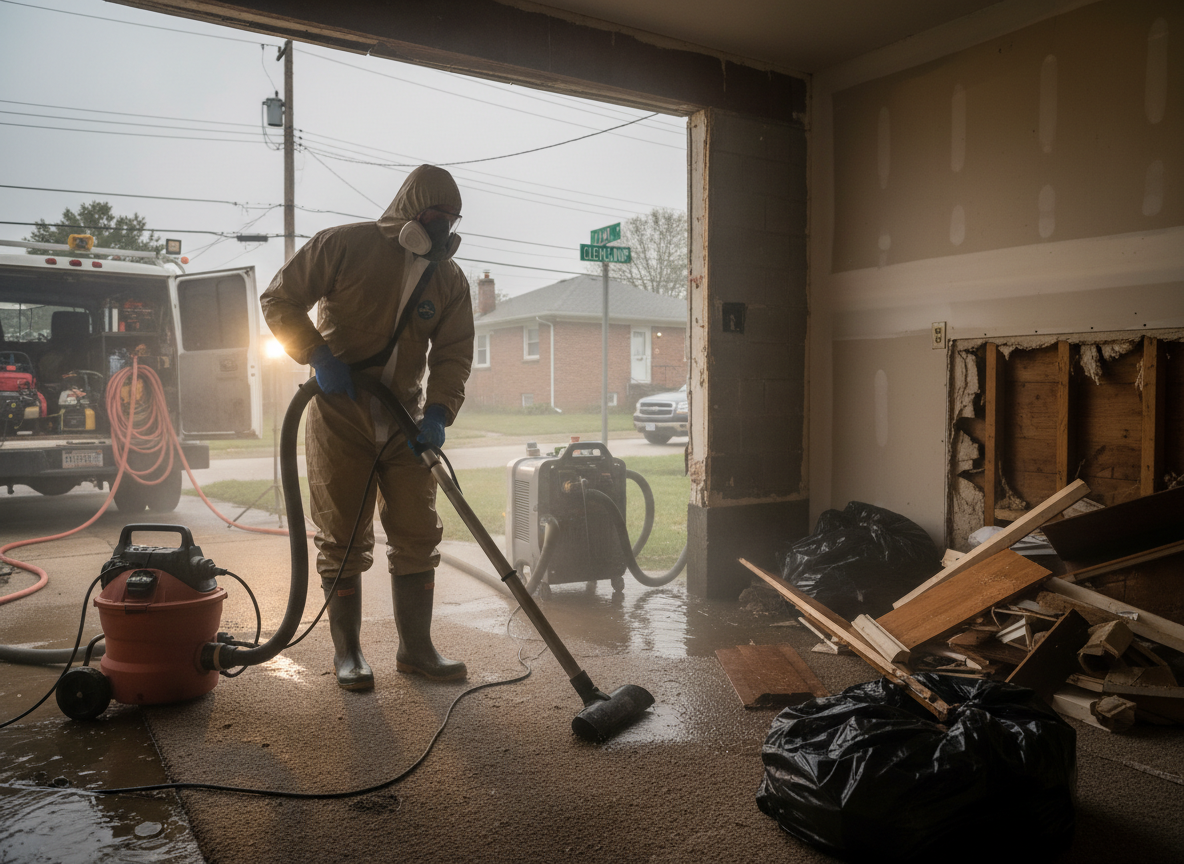
Cleveland's humid continental climate brings cold snowy winters that freeze pipes in pre-1950 homes common in Ohio City and Tremont, leading to sudden bursts once temperatures rise. Water damage cleanup here starts with locating hidden moisture behind plaster walls and under hardwood floors typical of these neighborhoods. Technicians use moisture meters and thermal imaging to map saturation in basements that sit close to the water table along the Cuyahoga River corridor.
Summer storms dump heavy rain on flat-roof buildings in University Circle and Little Italy, pushing water into attics and down interior walls. Cleanup crews remove saturated insulation and drywall while protecting original trim and built-ins that cannot be replaced easily. In Detroit-Shoreway and nearby Lakewood, older sewer lines often back up during high water events, requiring containment barriers and antimicrobial treatment before drying begins.
Work in Parma and Cleveland Heights frequently involves multi-story homes where water migrates through balloon framing, so crews set up containment zones and negative air to keep dust and spores from spreading to unaffected rooms. Extraction equipment must handle both standing water and deeply absorbed moisture in brick foundations common throughout the county.
Technician insight
In Cleveland, the thing that catches most people out with water damage cleanup is how quickly moisture travels through balloon-framed walls in 1920s homes once a pipe bursts during the first thaw after a snowy winter. Homeowners in Ohio City often stop at the visible puddle and miss the water that has wicked up into plaster and under floorboards, which then feeds mold within days.
Frozen pipe in Ohio City row house
A burst pipe on the second floor sent water down interior walls into the basement. Crews found saturation behind plaster and under the original hardwood. They extracted water, opened wall cavities for drying, and treated for mold risk before closing everything back up.
Water Damage Cleanup Services We Offer
✓Basement Water Extraction
Remove standing water from Cleveland basements after pipe bursts or storms, then extract moisture from concrete floors before mold sets in.
✓Sewage Backup Cleanup
Contain and remove contaminated water from older sewer lines in Ohio City and Tremont, followed by disinfection and odor neutralization.
✓Carpet and Flooring Drying
Lift and dry hardwood and carpet in historic homes across University Circle without damaging original materials or subfloors.
✓Attic Insulation Removal
Extract wet insulation after roof leaks in Lakewood and Cleveland Heights homes, then install new material once drying is complete.
✓Wall Cavity Drying
Drill small access points and force dry moisture trapped behind plaster in pre-war buildings throughout Cuyahoga County.
Water Damage Cleanup Cost in Cleveland, OH
| Service | Typical Range | What Affects It |
|---|---|---|
| Basement water extraction | $600–$1,800 | Varies with depth and whether sewage contamination is present |
| Full-home drying setup | $400–$1,200 | Influenced by number of rooms and hidden moisture in older walls |
| Sewage backup remediation | $900–$2,500 | Higher when biohazard protocols and disposal are required |
| Attic insulation removal and drying | $350–$950 | Depends on access and volume of wet material |
Ranges are typical for Cleveland, OH and confirmed with an exact written quote before any work starts.
How it works
- 1
Initial Assessment
Technicians inspect the property, identify water source, and document affected materials in neighborhoods like Tremont or Downtown Cleveland.
- 2
Water Extraction
Remove standing and trapped water using pumps and vacuums suited to older foundations common in Cuyahoga County.
- 3
Drying And Dehumidification
Place air movers and dehumidifiers to bring moisture levels down while monitoring hidden cavities.
- 4
Sanitization And Final Check
Apply antimicrobial treatments and verify dryness with meters before returning the space to the homeowner.
Pricing
Pricing depends on water volume, affected square footage, and whether sewage is involved; most Cleveland jobs fall into mid-range residential tiers.