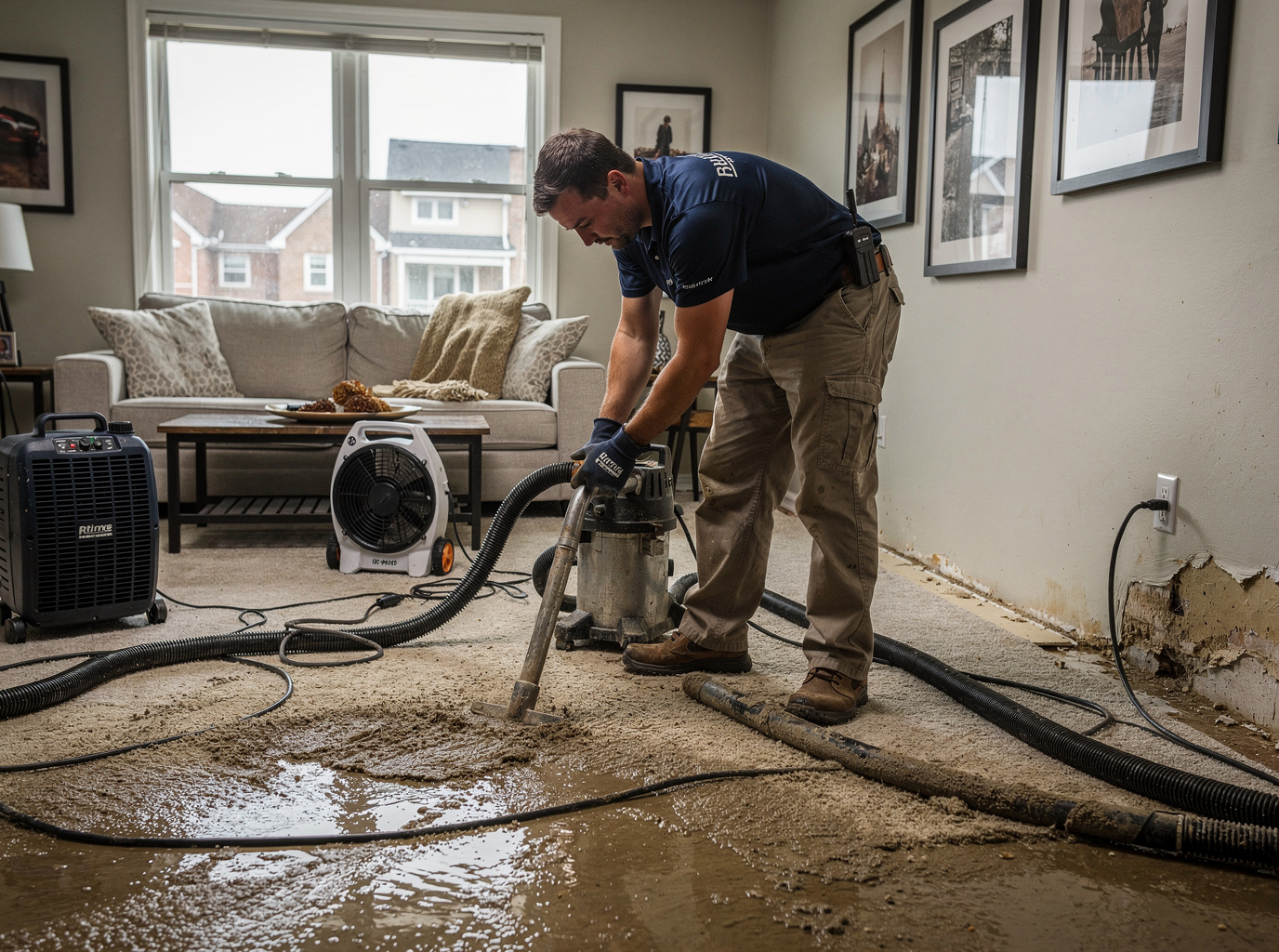
Cleveland's older housing stock in neighborhoods like Ohio City and Tremont often features galvanized or cast-iron supply lines installed decades ago. When temperatures drop below freezing, these lines expand and split, sending water into finished basements and first-floor walls. Restoration crews must open drywall from the floor up rather than the ceiling down to follow the actual water path created by gravity and the slight slope of many Cuyahoga County lots toward the river valley.
Lake-effect snow and rapid thaws also stress downspouts and foundation drains around Progressive Field and University Circle. Water that saturates clay-heavy soils can push through limestone block foundations common in Detroit-Shoreway. Technicians use moisture meters on brick and plaster rather than standard drywall protocols because many Tremont and Little Italy homes retain original lath-and-plaster that holds moisture longer and requires slower drying to avoid cracking.
Nearby suburbs such as Lakewood and Cleveland Heights share the same 1920s–1940s plumbing but sit on slightly higher ground, changing pump-out strategies. Crews stage equipment on narrow streets and alley access points rather than wide driveways, and they coordinate with local waste-water rules when discharging extracted water near combined sewers. These site realities dictate longer setup times and different containment layouts than newer builds in Parma.
Technician insight
In Cleveland the thing that catches most people out with water damage repair is how far water travels behind plaster in 1920s Ohio City homes before it shows on the surface. A small pipe leak near the front porch can run along the joists all the way to the kitchen because the floor slopes toward the old combined sewer line. Homeowners who stop at the visible stain usually end up tearing out twice as much material later.
Tremont Row House Freeze-Up
A homeowner in Tremont discovered water seeping from a first-floor wall after a January cold snap. Inspection showed a split galvanized line under the bathroom that had traveled along the sloped floor joists into the dining room. Crews removed a four-foot section of plaster, extracted water, and dried the cavity for six days before patching to prevent mold in the dense clay soil around the foundation.
Water Damage Repair Services We Offer
✓Burst Pipe Water Extraction
Remove standing water from split supply lines in older Cleveland homes and isolate the leak before drywall removal begins.
✓Winter Freeze Damage Repair
Address pipes that rupture during Cuyahoga County cold snaps, including selective wall demolition and targeted drying behind plaster walls.
✓Basement Foundation Leak Repair
Seal water intrusion through limestone block or poured foundations common in Ohio City and Tremont after heavy snow melt.
✓Post-Flood Structural Drying
Deploy commercial air movers and dehumidifiers calibrated for Cleveland's humid summers to dry joists and subfloors after river or street flooding.
✓Water-Damaged Drywall Replacement
Cut and replace saturated drywall or plaster in living spaces while preserving historic trim details found in University Circle and Little Italy homes.
Water Damage Repair Cost in Cleveland, OH
| Service | Typical Range | What Affects It |
|---|---|---|
| Emergency Water Extraction | $600–$1,800 | Higher in older homes with limited access or multiple levels |
| Structural Drying Setup | $400–$950 | Depends on square footage and number of rooms affected |
| Drywall and Plaster Removal | $350–$1,200 | Increases when historic trim or lath-and-plaster must be matched |
Ranges are typical for Cleveland, OH and confirmed with an exact written quote before any work starts.
How it works
- 1
On-Site Assessment
Technician maps water migration through the specific floor plan and notes whether plaster or drywall is present.
- 2
Water Removal
Extract standing water with submersible pumps sized for narrow Cleveland basement access points.
- 3
Drying and Monitoring
Place drying equipment and check moisture readings daily until levels match unaffected materials.
- 4
Repairs and Restoration
Replace damaged sections and return surfaces to pre-loss condition using matching materials where possible.
Pricing
Pricing varies with water volume, depth of migration into plaster walls, and whether work occurs after hours or on weekends.