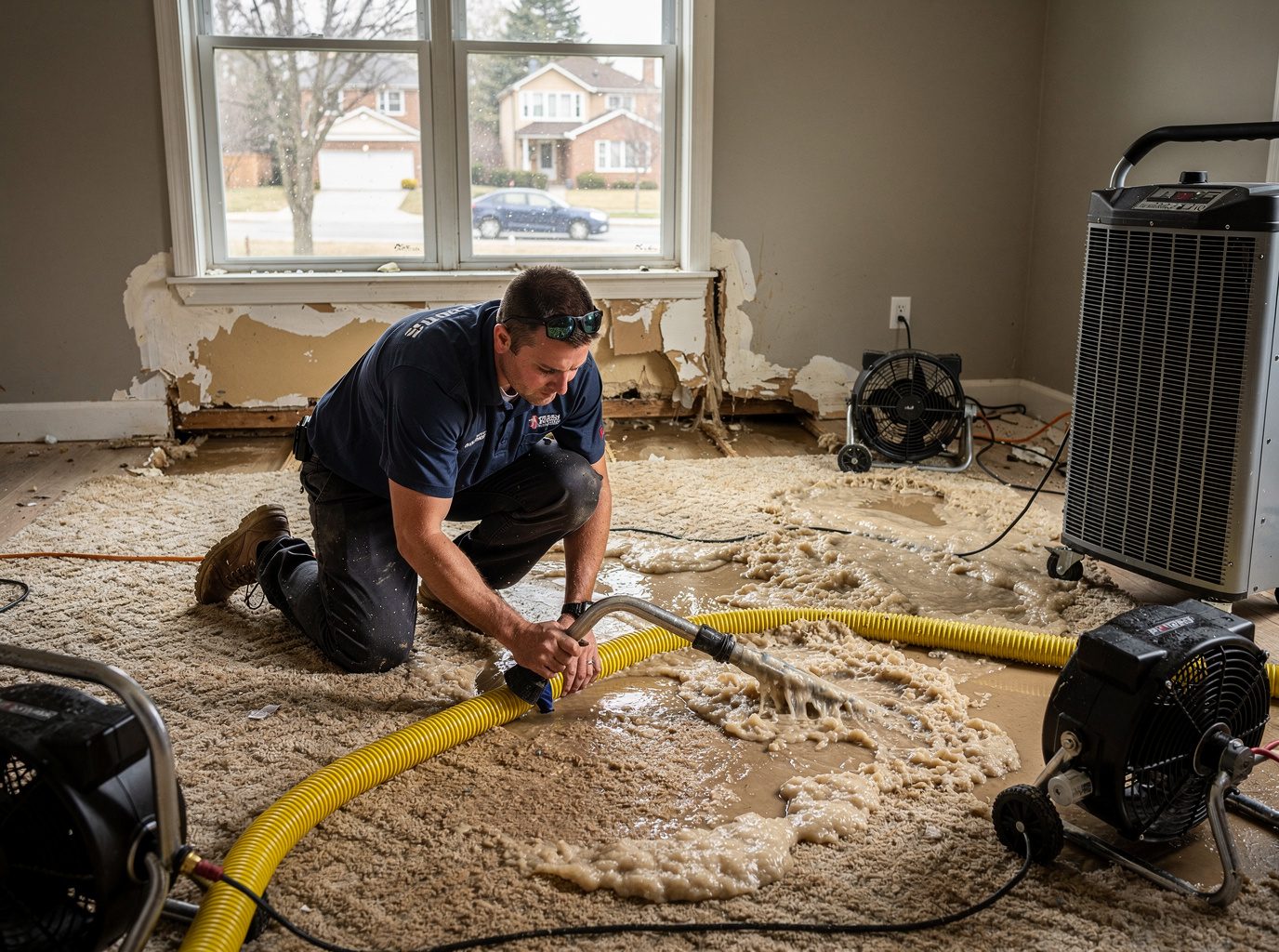
Cleveland's older housing stock, especially brick and frame homes built before 1950 in Ohio City and Tremont, often features plaster walls and crawl spaces that trap moisture after leaks. Snow melt combined with the humid continental climate can push water under foundations along Detroit-Shoreway, requiring moisture meters and targeted drying rather than surface fans alone. Homes near the Rock and Roll Hall of Fame or Progressive Field sit on clay-heavy soils that slow drainage, so extraction must account for hidden saturation in basements.
In University Circle and Little Italy, multi-story properties with shared walls mean water can migrate between units during pipe failures or roof leaks. Warm summer storms bring sudden volume that overwhelms older gutters, while winter freezes in Lakewood and Parma frequently split supply lines in unheated spaces. Technicians must open walls selectively to avoid unnecessary demolition while still reaching wet insulation behind lath.
Cuyahoga County building practices from earlier eras left many properties without modern vapor barriers, so secondary mold risk rises quickly after any standing water event. Restoration focuses on removing affected materials, applying antimicrobial treatments only where needed, and documenting moisture levels at every step to satisfy insurance adjusters familiar with regional claims.
Technician insight
In Cleveland the thing that catches most people out with water damage restoration is how quickly meltwater from heavy snow finds its way under the old brick foundations in Ohio City and Tremont; once it reaches the dirt floors or crawl spaces it spreads laterally before homeowners notice.
Tremont Row House After Frozen Pipe
A burst pipe on the second floor sent water down interior walls into the finished basement of a 1920s home. Extraction revealed saturated plaster and insulation behind the original lath. We removed the wet sections, ran drying equipment for four days, and confirmed dry readings before closing the cavities.
Water Damage Restoration Services We Offer
✓Burst Pipe Water Extraction
Rapid removal of standing water from supply line failures common in older Cleveland homes, followed by drying of floors and walls to prevent hidden damage in plaster and subfloors.
✓Basement Flood Cleanup
Pumping and drying of basements after heavy rain or snow melt, with attention to clay soils around Tremont and Ohio City that trap moisture against foundations.
✓Ceiling and Wall Water Damage Repair
Assessment and restoration of water intrusion through roofs or upper floors, including selective removal of saturated drywall and insulation in multi-unit buildings near University Circle.
✓Carpet and Flooring Water Removal
Extraction and drying of hardwood, carpet and pad affected by leaks, with care for older flooring types found in Downtown Cleveland and Detroit-Shoreway properties.
✓Appliance Leak Restoration
Cleanup after washing machine, water heater or dishwasher failures, focusing on containment and drying in tight utility spaces typical of Cleveland Heights homes.
Water Damage Restoration Cost in Cleveland, OH
| Service | Typical Range | What Affects It |
|---|---|---|
| Emergency Water Extraction | $250–$650 | Varies with volume and access difficulty in basements or multi-story homes. |
| Drying Equipment Rental Per Day | $150–$350 | Based on square footage and number of rooms requiring continuous drying. |
| Wall Or Ceiling Cavity Drying | $400–$900 | Higher when plaster or lath must be removed in pre-1950 homes. |
| Full Basement Restoration | $800–$2,200 | Increases with clay soil drainage issues and extent of finished space. |
Ranges are typical for Cleveland, OH and confirmed with an exact written quote before any work starts.
How it works
- 1
On-Site Assessment
Technician inspects the affected area, measures moisture levels, and identifies migration paths through walls or floors using the property's age and construction type as reference.
- 2
Water Extraction
Standing water is removed with pumps and vacuums, followed by removal of heavily saturated materials that cannot be dried in place.
- 3
Drying And Dehumidification
Industrial air movers and dehumidifiers run until moisture readings return to normal, with daily monitoring to track progress in humid Cleveland summers.
- 4
Final Inspection And Documentation
All surfaces are checked for remaining moisture and photos plus readings are provided for insurance purposes before any reconstruction begins.
Pricing
Costs depend on the volume of water, number of affected rooms, and whether hidden cavities require opening in older Cleveland construction.